2024 foraged dyes: megapost
experiments with foraged dye materials including oak galls, walnut, and sumac.
This was originally shared as a series of posts on an old blog. I've combined them for easier reading.
gather & prep
I’ve improved at identifying plants over the last few years, but my plant interest is strongest when I find ways to interact with them. I had been reading books about natural dyes but was always too nervous to start. I recently attended a buckthorn dye workshop, which gave me the encouragement that I needed. We dyed 100% cotton fabric scraps that had been pre-mordanted with aluminum acetate and calcium carbonate, then dyed with bark from invasive common buckthorn.
I’ll be doing a similar process, swapping out the calcium carbonate with wheat bran because it’s easier to find locally. (Edit: I later found calcium carbonate at a local homebrew supplies shop, so it’s not too hard to find after all!) These instructions by Botanical Colors are guiding me.
It’s March in Chicago. I don’t have fresh leaves or flowers to work with, but I found great dye materials in my cabinet and in the alley behind our apartment. I spent last summer walking around my neighborhood to familiarize myself with plants nearby. It shows that dyeing can be done all year round if you know where to look! I’m using:
- Bark from a thicket of invasive red mulberry Morus rubra in our alleyway
- Dehydrated mulberry leaves and staghorn sumac berries that I foraged for tea last year
- Black walnuts that we stored in my friend’s freezer last summer
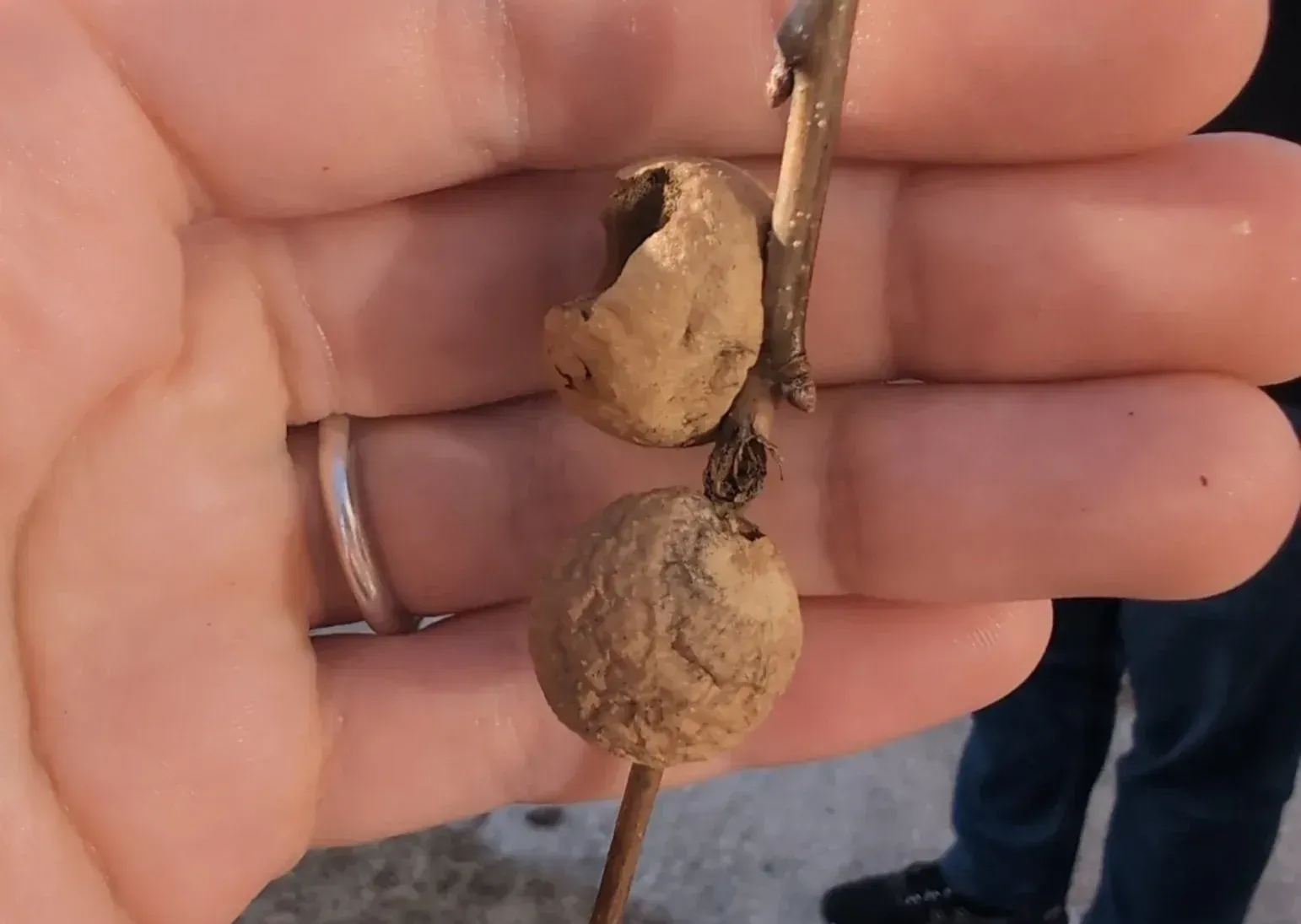
- As I walked to my friend’s condo to pick up the walnuts, I had the fortune of finding oak galls! iNat says it is Oak Rough Bulletgall Wasp.
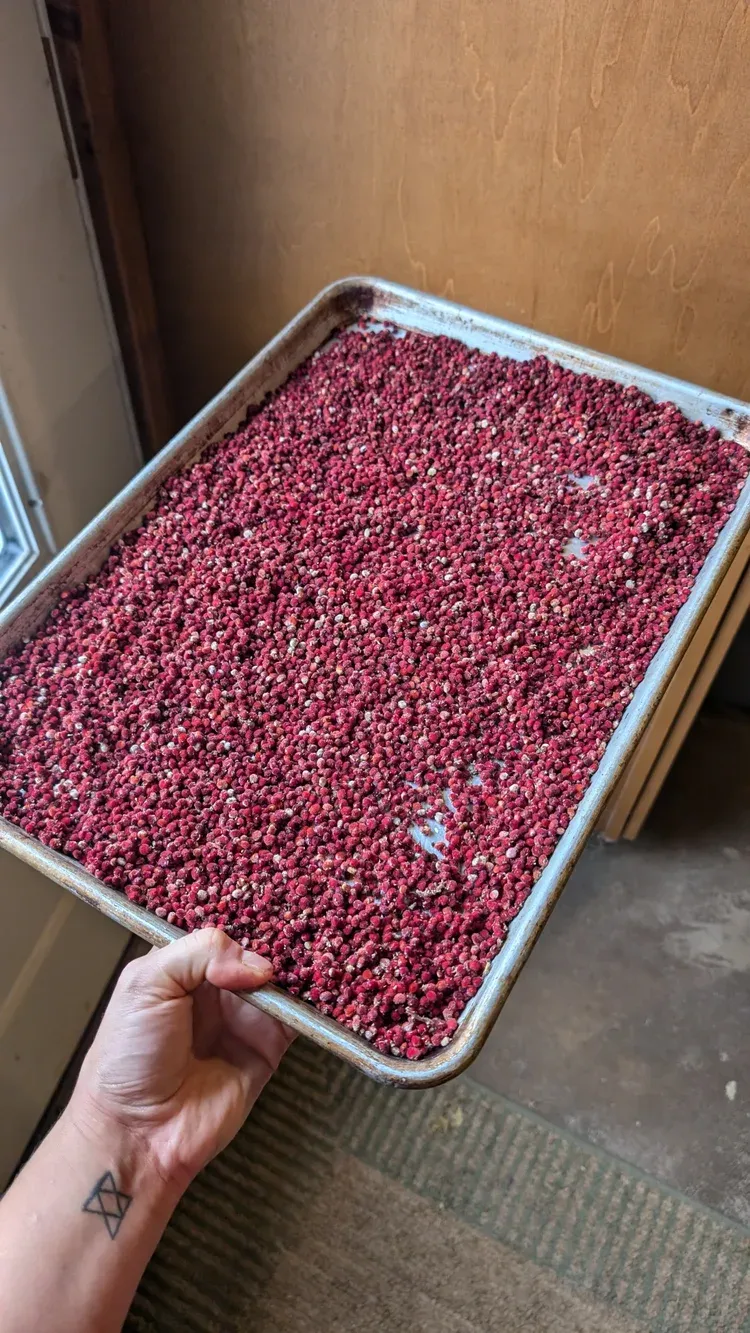
Back in September, I gathered, dried, and sifted through the sumac berries to make tea throughout winter. Sumac is special for so many reasons, and it grows in massive, dense thickets near my parents’ home in Michigan. Here’s what that process looked like:
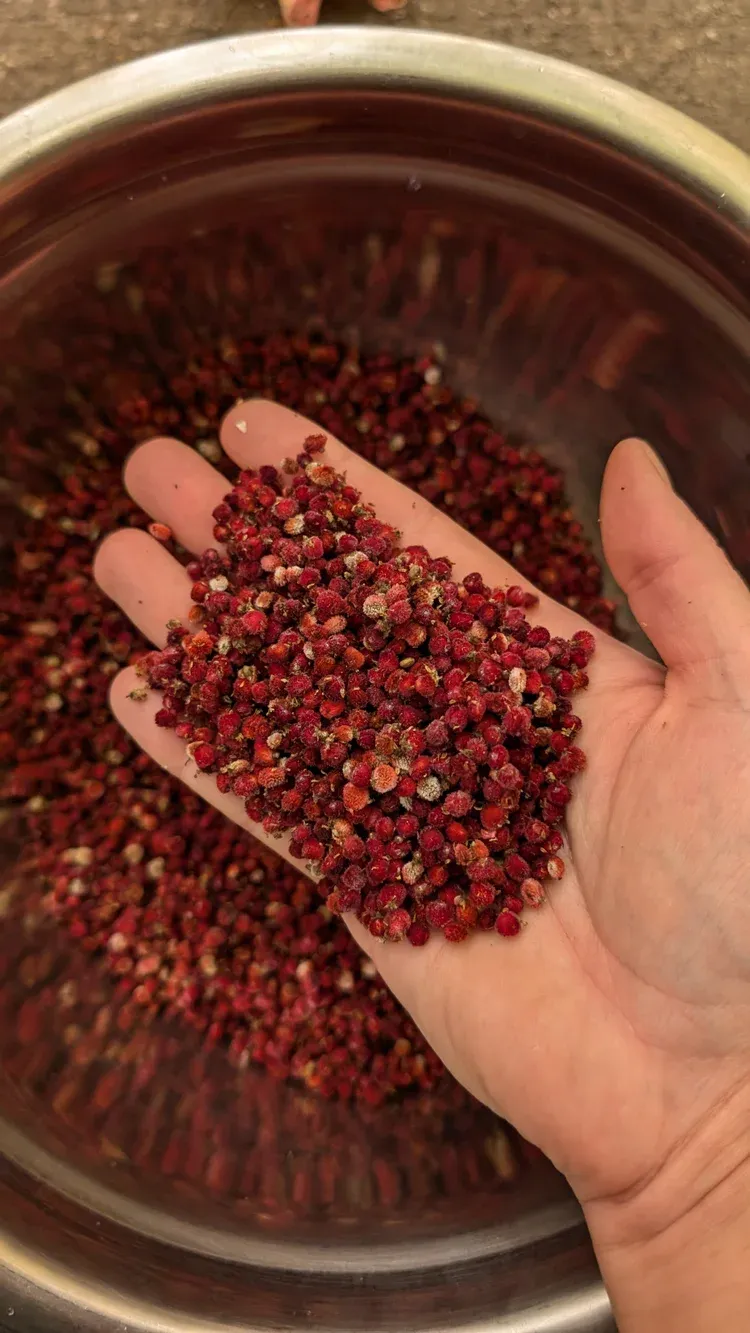
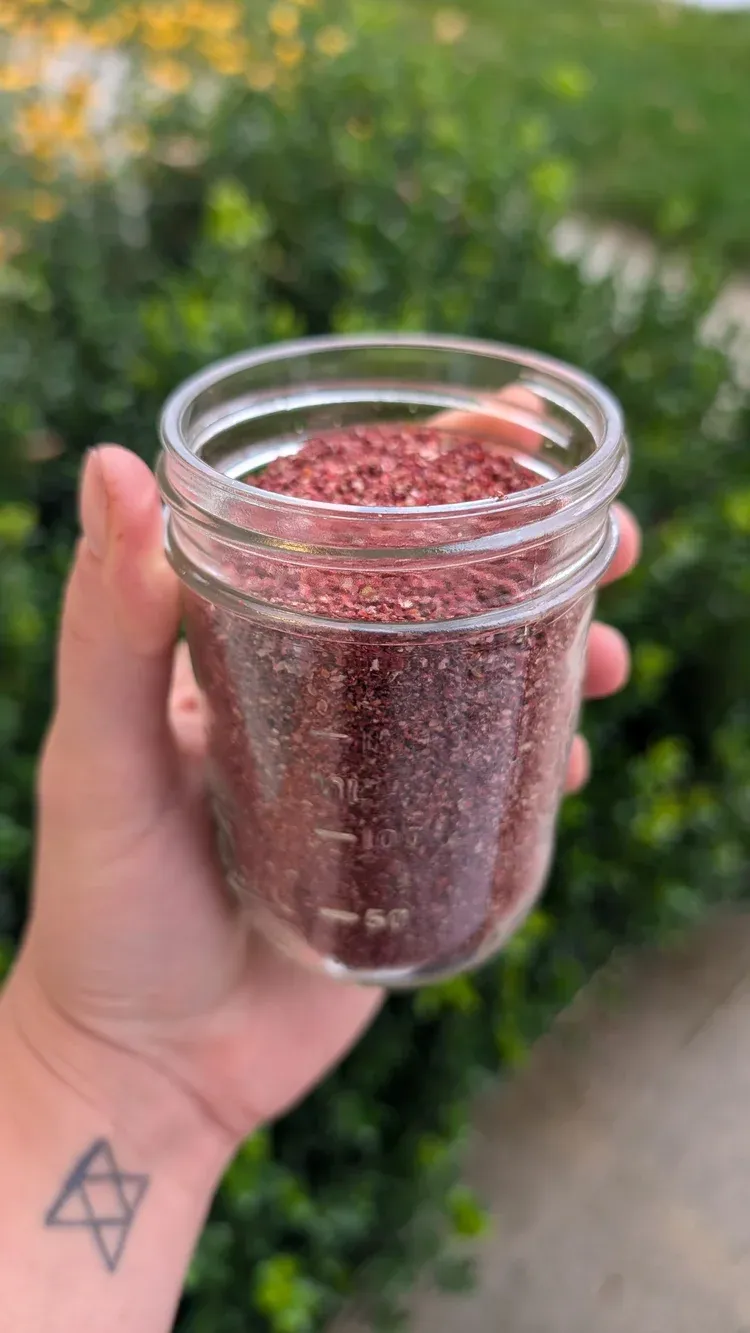
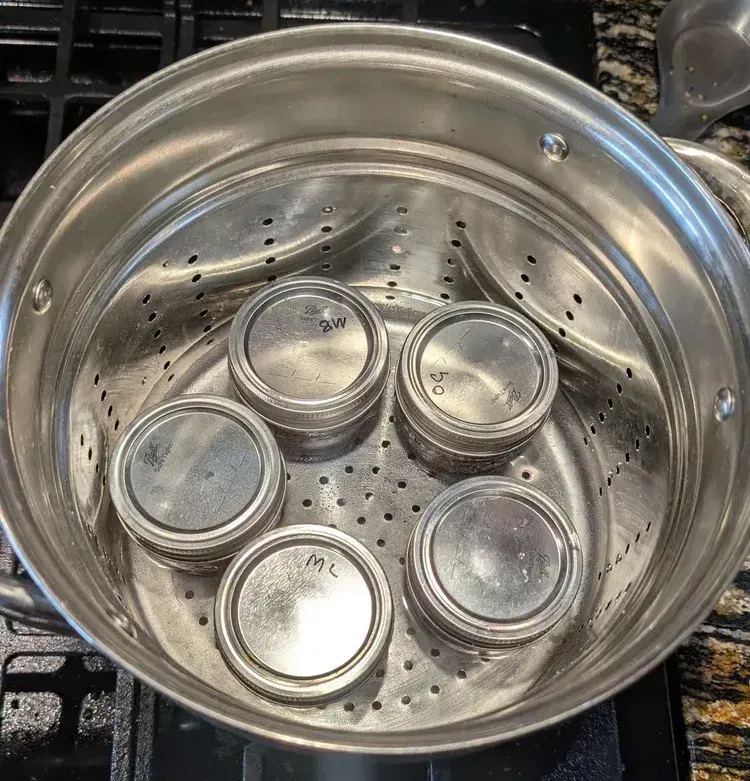
I took rough measurements of the dry materials, mostly as a point of reference for next time I use them. The galls and walnut were smashed, then the five materials were mixed with tap water in separate glass jars. I placed them in the stockpot on the stove for a few hours at low heat, then let them sit overnight. I haven’t used any of these materials before, so I’m giving them all the same treatment. Here’s how they looked in the morning:
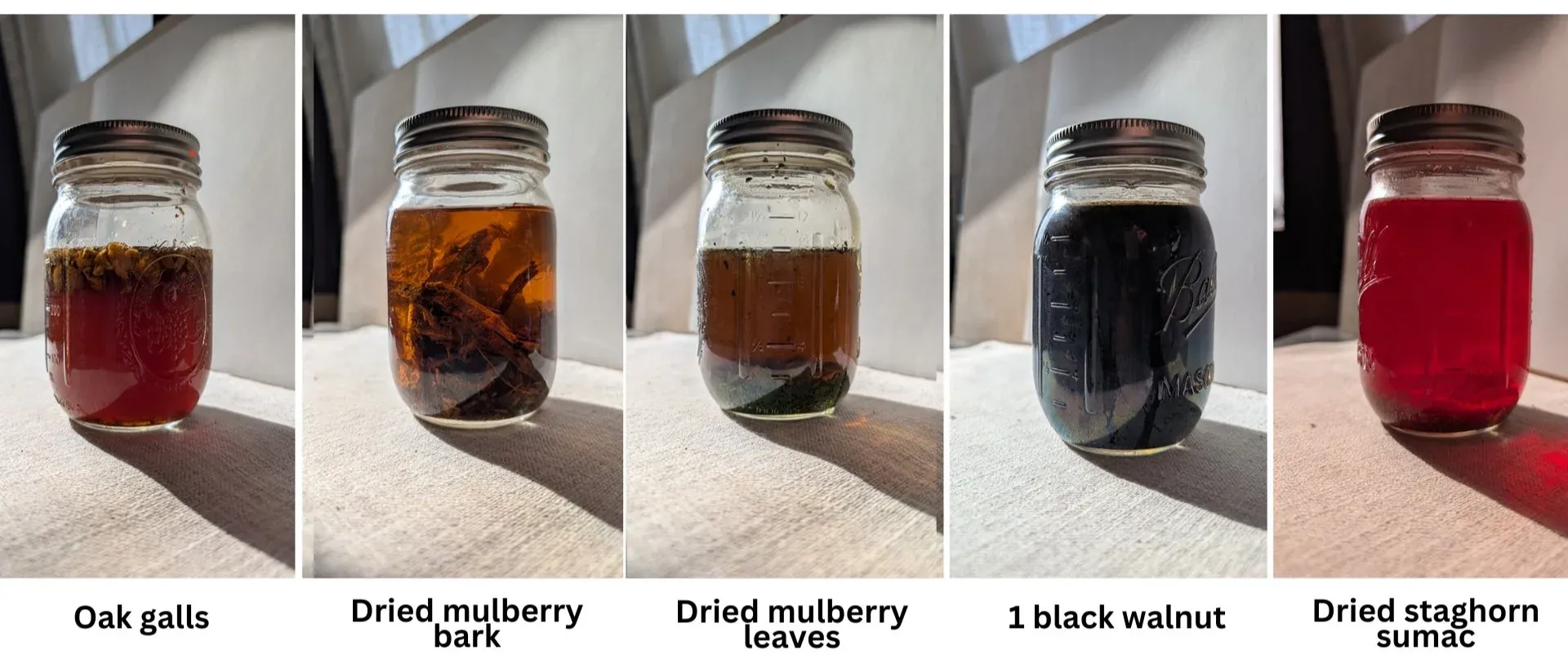
I want to stretch these dye baths so that I can experiment separately with iron and soda ash. I can use these “mini” dye baths multiple times before exhausting them, so I have a lot to play with here!
results
I kept the jars in the heated water for an afternoon, then let them sit in the warm bath overnight. I took out the fibers and let them dry for about an hour before rinsing them gently with cold water. I love the reveal! There’s so much that I would do differently next time, but seeing the variation in color between the mordanted cotton and the wool yarn was rewarding. I have so many questions!!
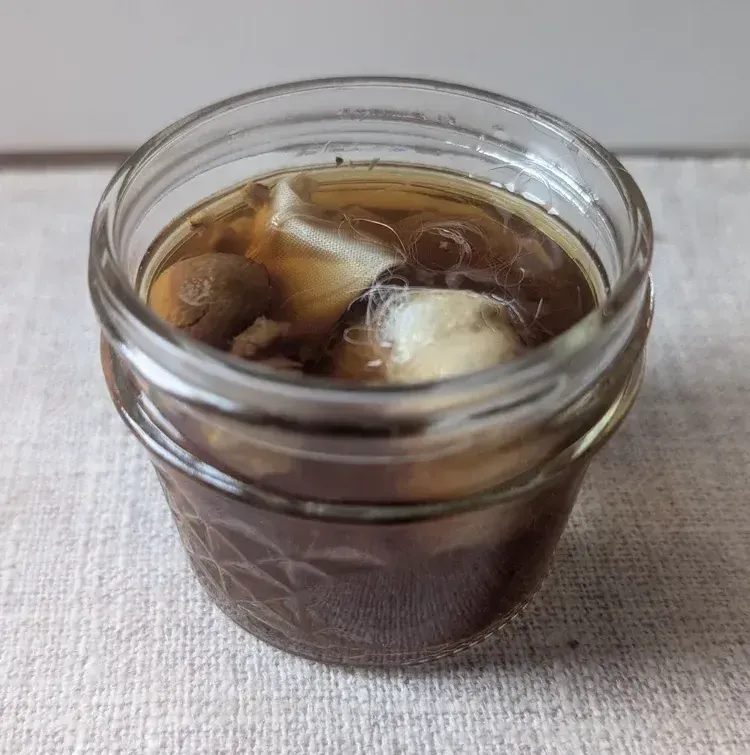
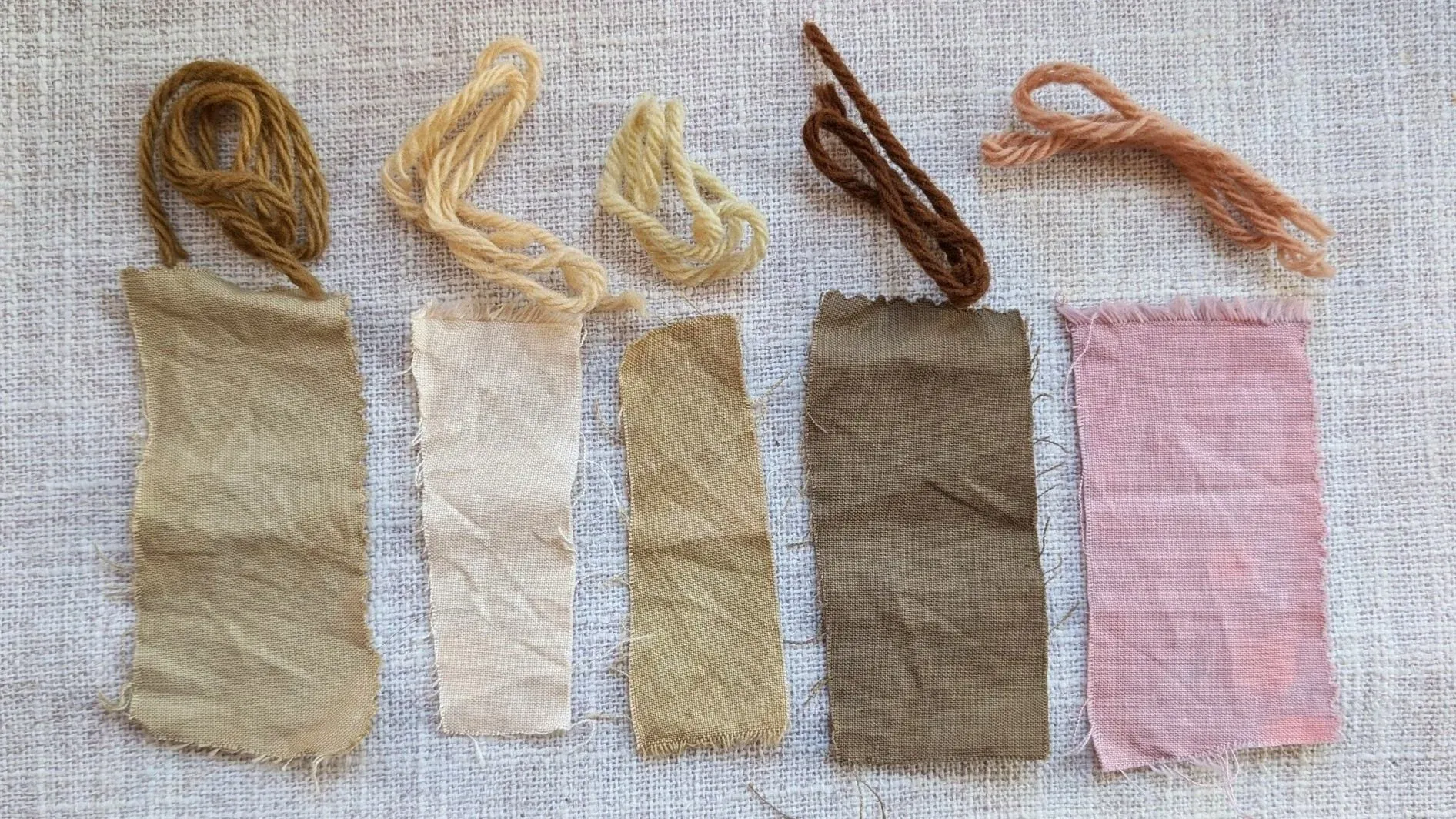
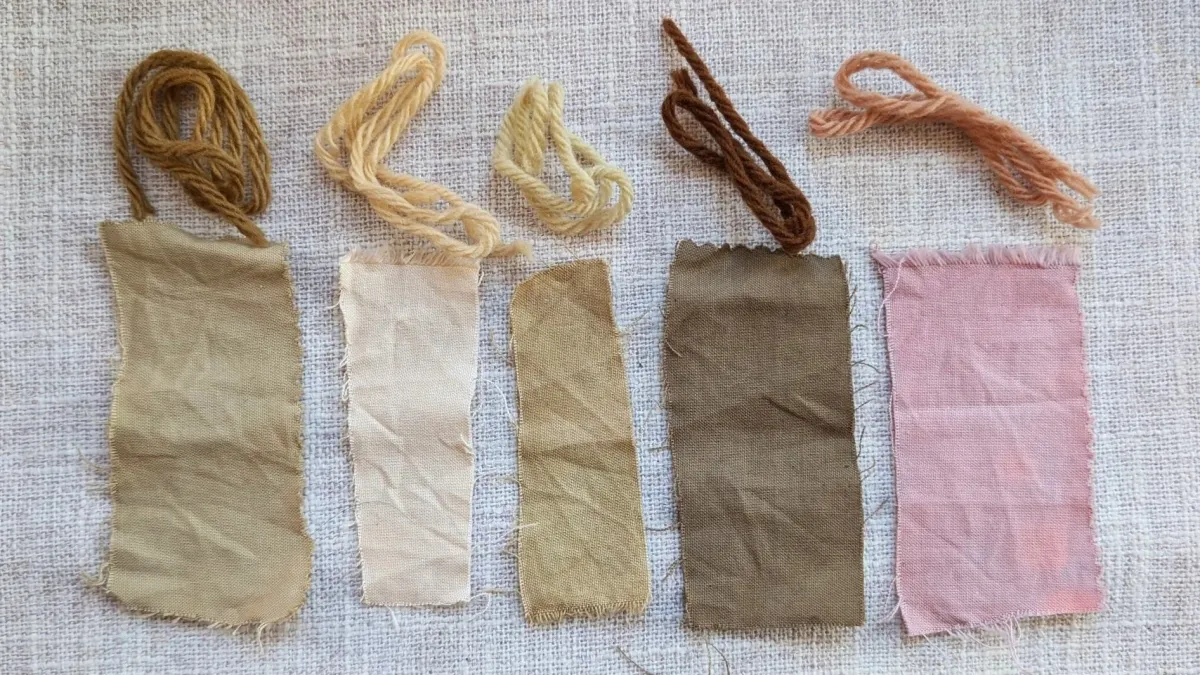
I adore the brown color of the walnut yarn. It’s such a deep, rich tone that is so welcoming to the eyes. Walnut will always be one of the most beautiful colors in the world to me, being an amateur woodworker as well. All of the dyes on cotton turned out fairly light, but the sumac took especially well to the cotton in comparison to the wool.
Sumac’s dye was especially interesting to me because you can see blue splotchiness in the bottom right corner. As the fabric dried, the splotches diluted and spread, turning the pink cool-toned. I believe the splotches occurred because it was drying on an uncleaned countertop and the contamination effected the acidity of the dye as it cured into the wet fabric.
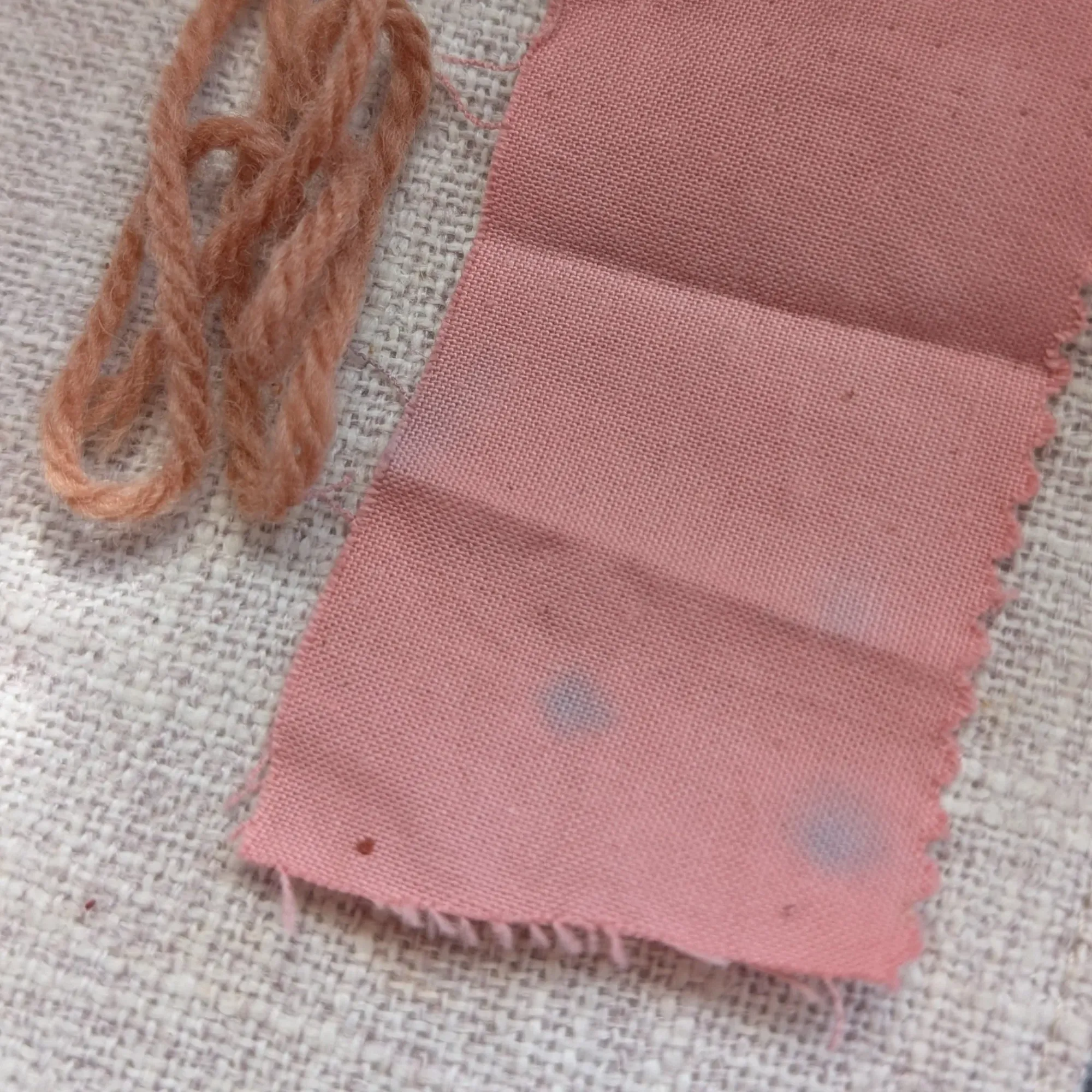
I wondered if I could get blue out of sumac! It reminds me of how soil acidity can be effected to get different colors from hydrangea blossoms.
I have iron and soda ash as modifiers, and I was especially curious about their effect on the oak galls and walnut. I’ll be trying that next.
modifiers
Let’s get weird!
I did the first batch with unmodified dye baths and tap water. Since I am doing mini baths in quarter pint jars, I have plenty of pigment to keep working with.
I first used iron water, which was simply made by soaking a rusty nail in a container of water for a few weeks. Yum. I added roughly a quarter teaspoon to each jar, which was way more than enough. I left the fibers in the mini baths for about three hours.
I separately used soda ash, following the same process. The amount of time each fiber scrap spent in the bath is relatively variable - I just wanted to get a rough idea of the modifier effects here. The fibers spent at least 2 hours in the dye bath, except some sumac samples.
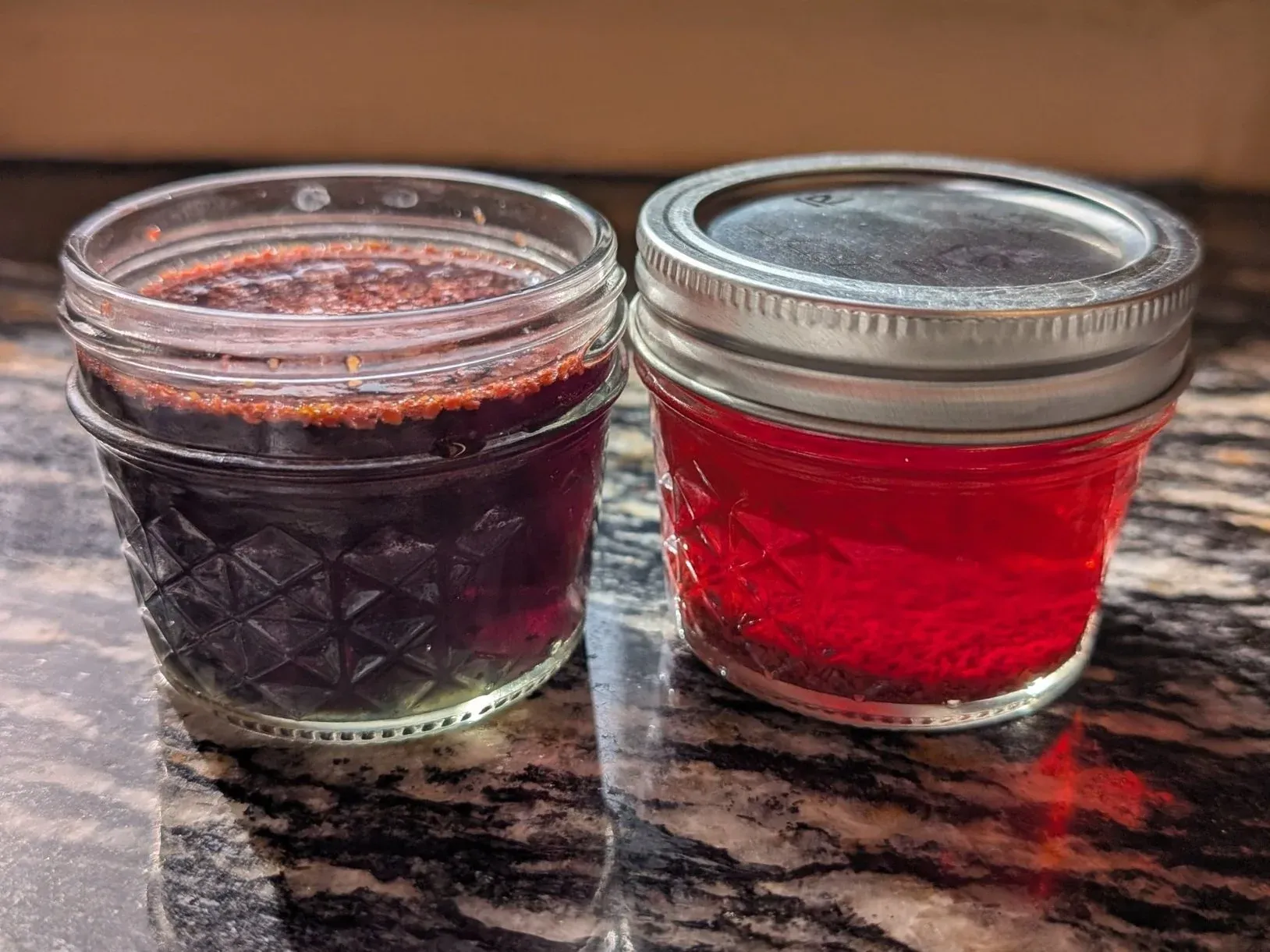
staghorn sumac
I’m not surprised that sumac could have a wide range of results, but I wasn’t prepared for how wide the range is! Sumac starts at a lovely pink but can transform all the way from a stormy purple to a light green. The amount of modifier added to the water dramatically affects how rich the colors are. I’m guessing that these samples are very volatile and would not hold up against the elements, but it’s a fun chemistry experiment.
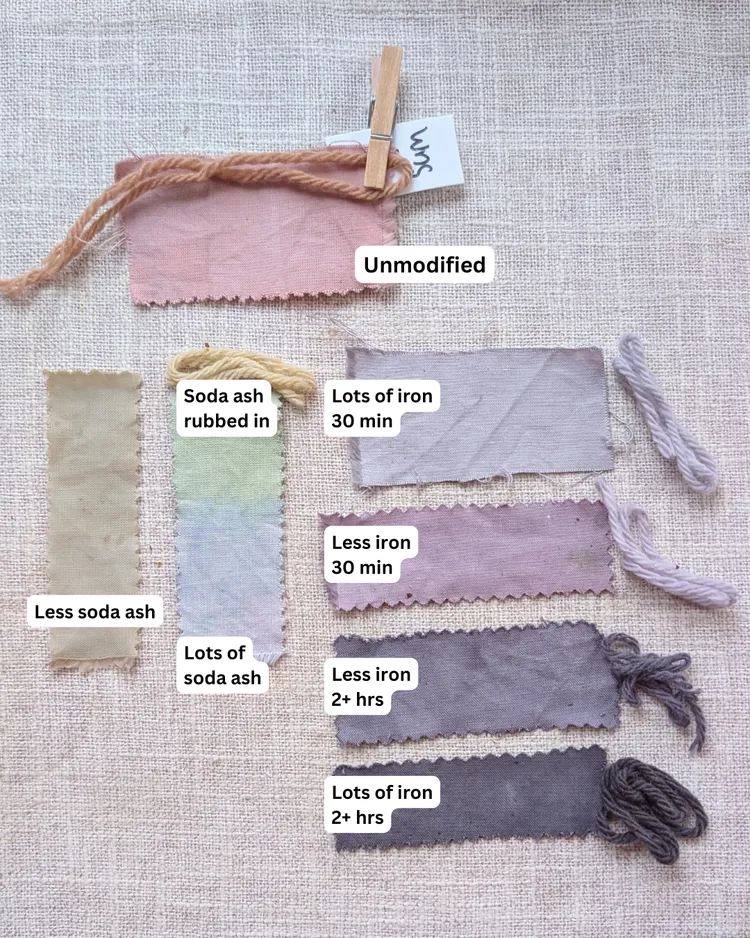
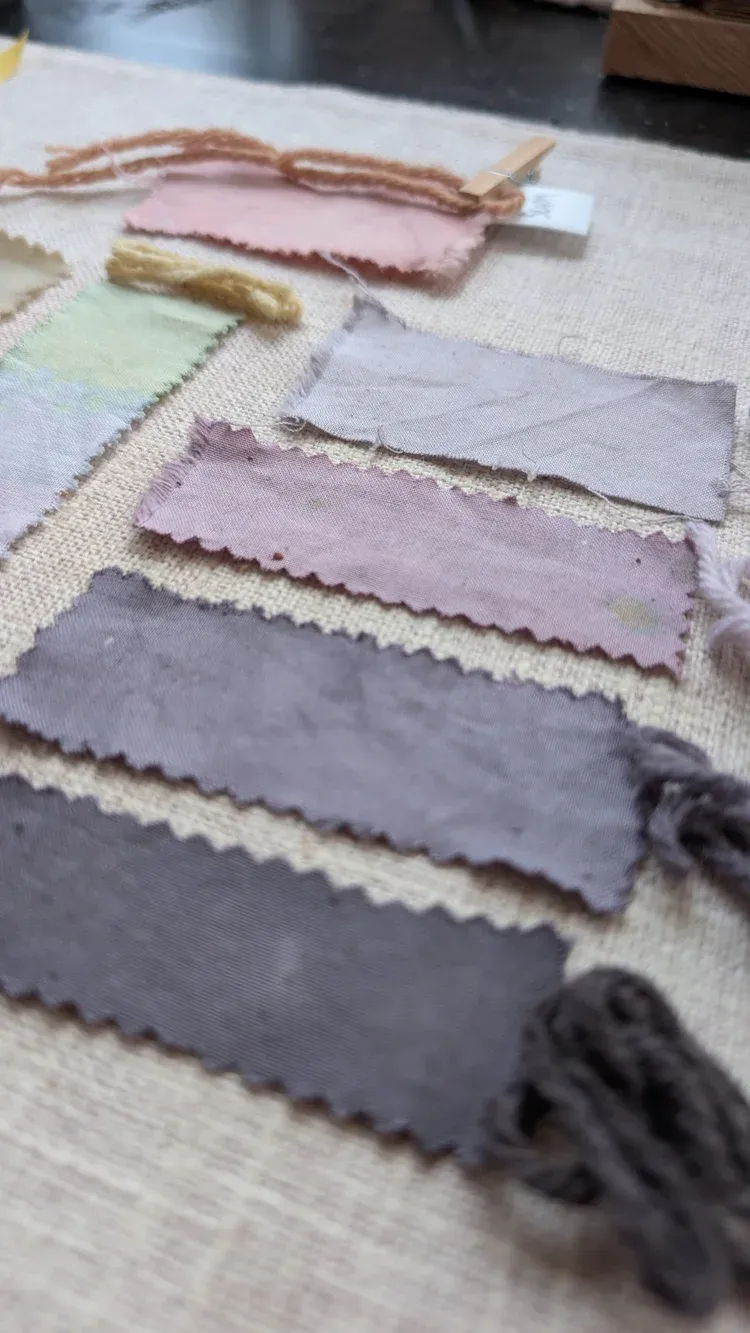
All sumac samples.
oak galls
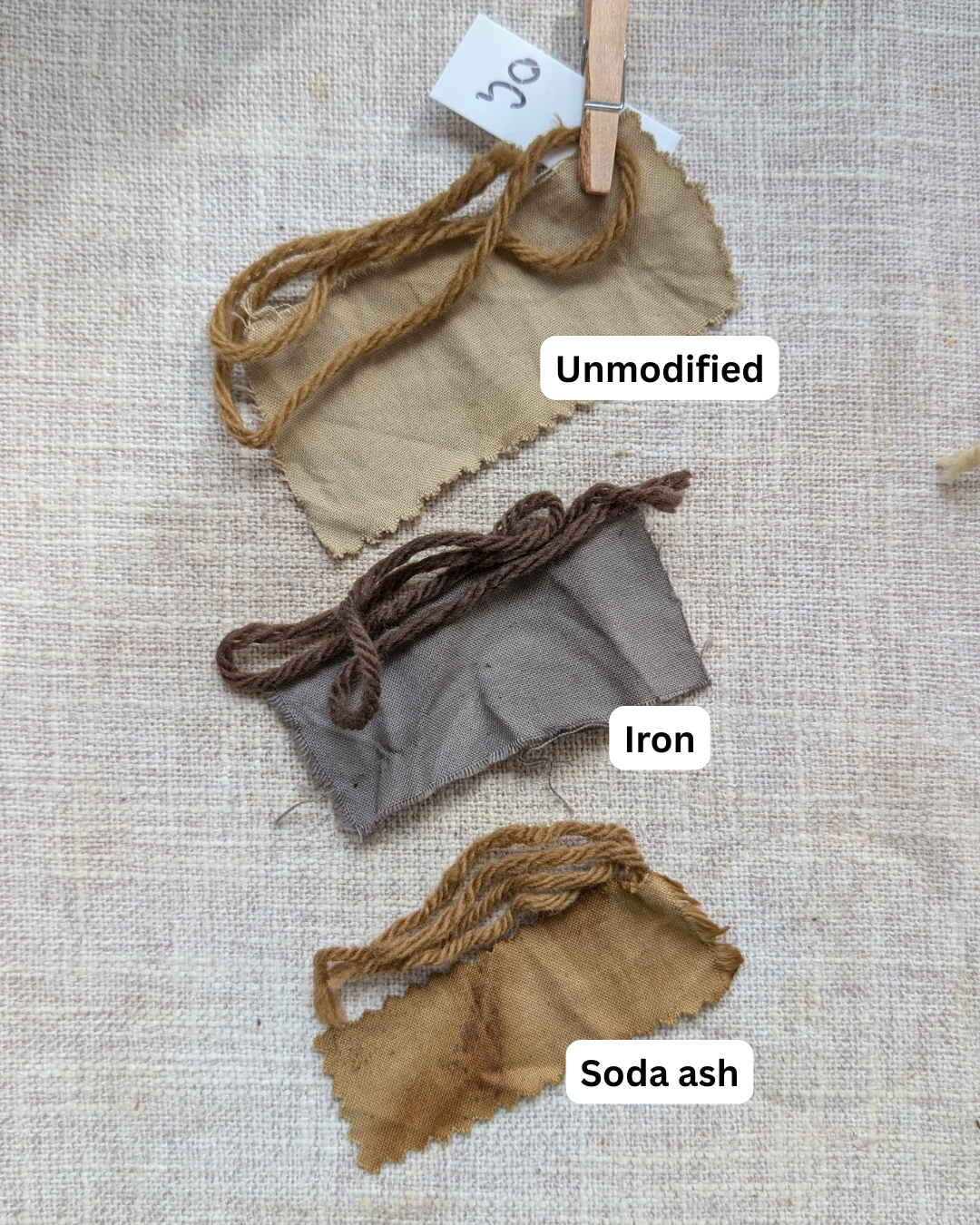
I love the effects on the oak gall samples. It raises so many questions about if different oak galls respond differently to various conditions. I’d love to experiment with this more!
black walnut
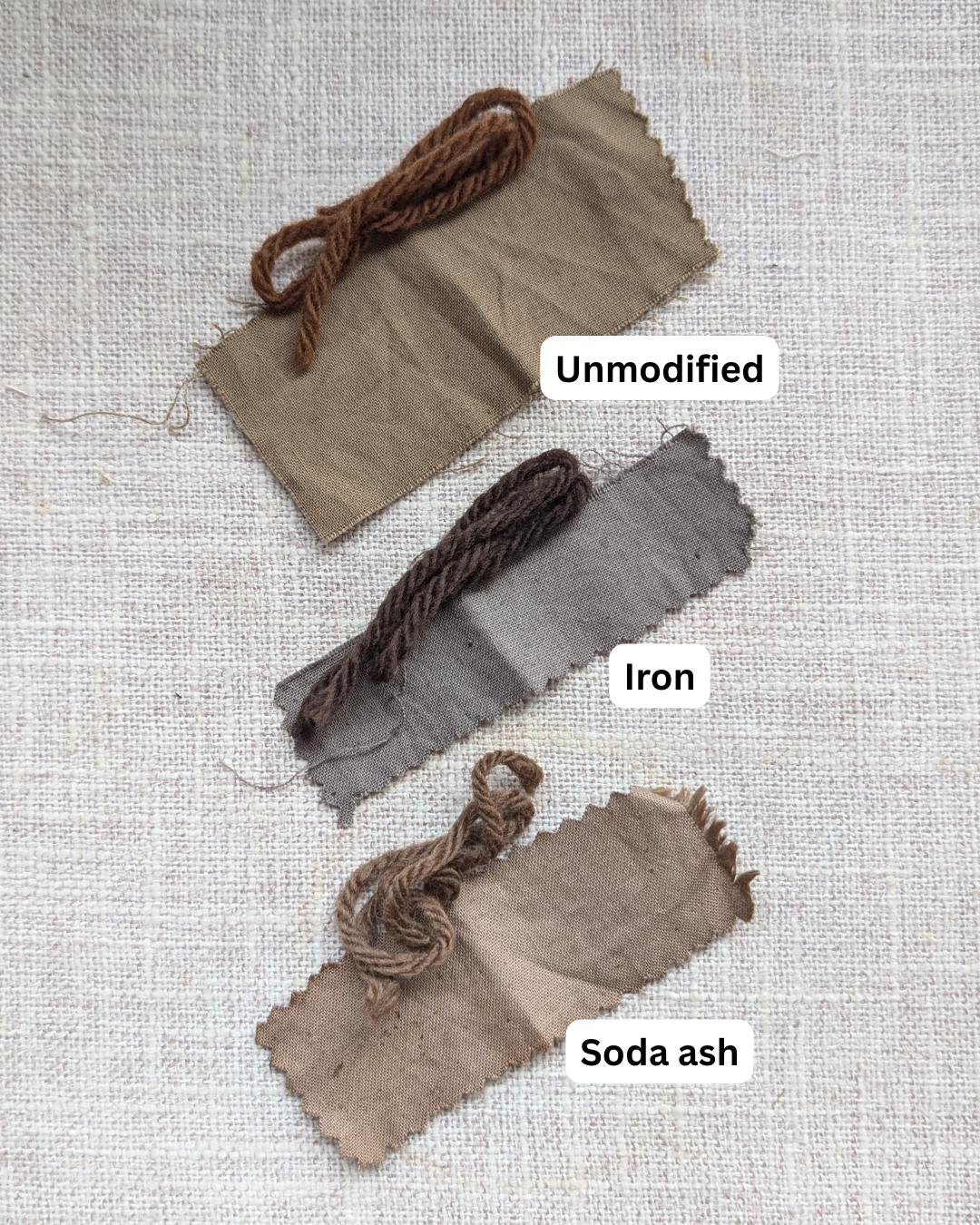
Walnut was naturally rich and gorgeous across all samples. It’s no wonder people love working with this dye material. The animal fibers gobble it up.
mulberry bark
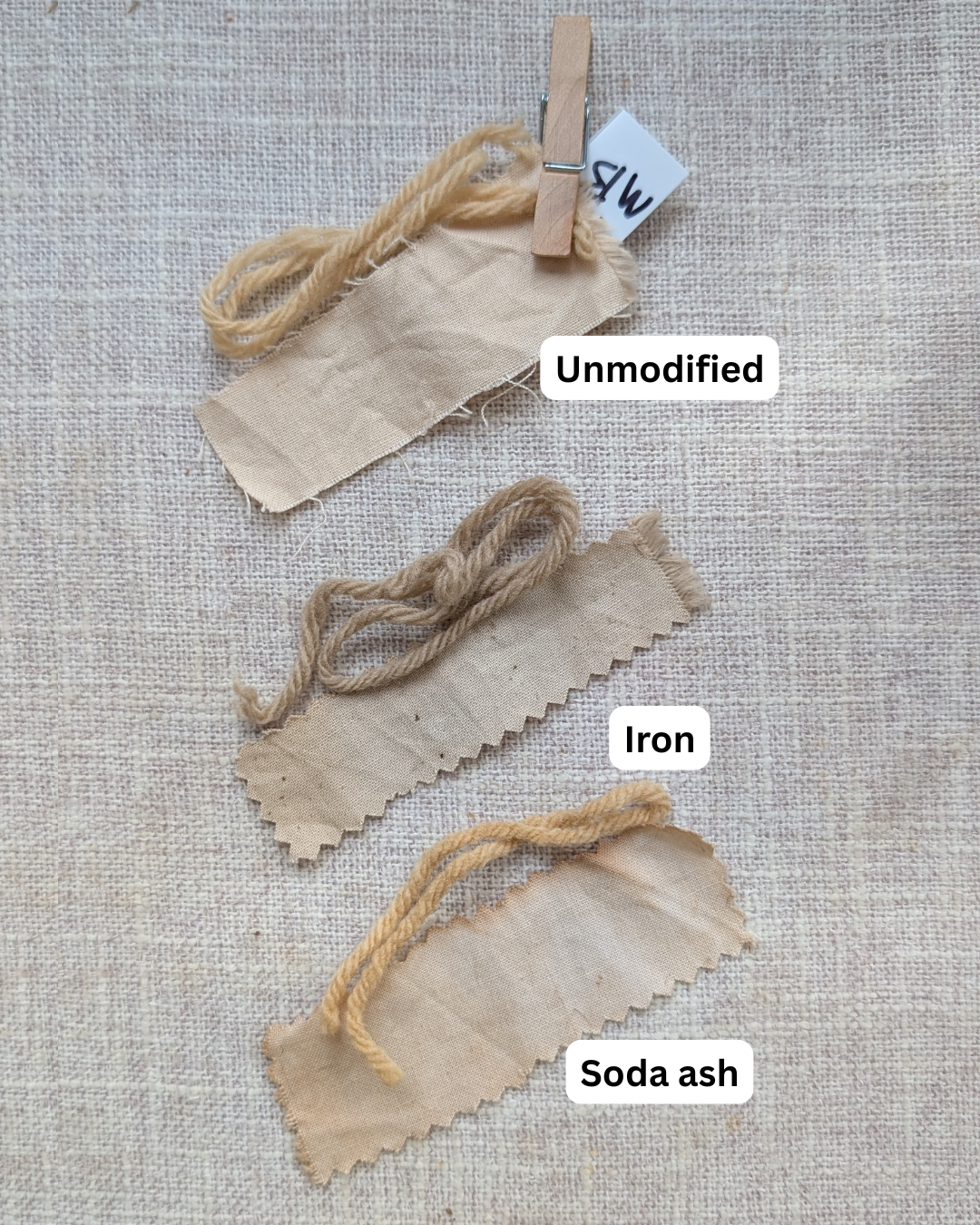
Subtle changes here. I’m guessing that bark needs more time to soak before dyeing effectively. I’d like to try bark that has been sitting in water for days instead of hours.
mulberry leaves
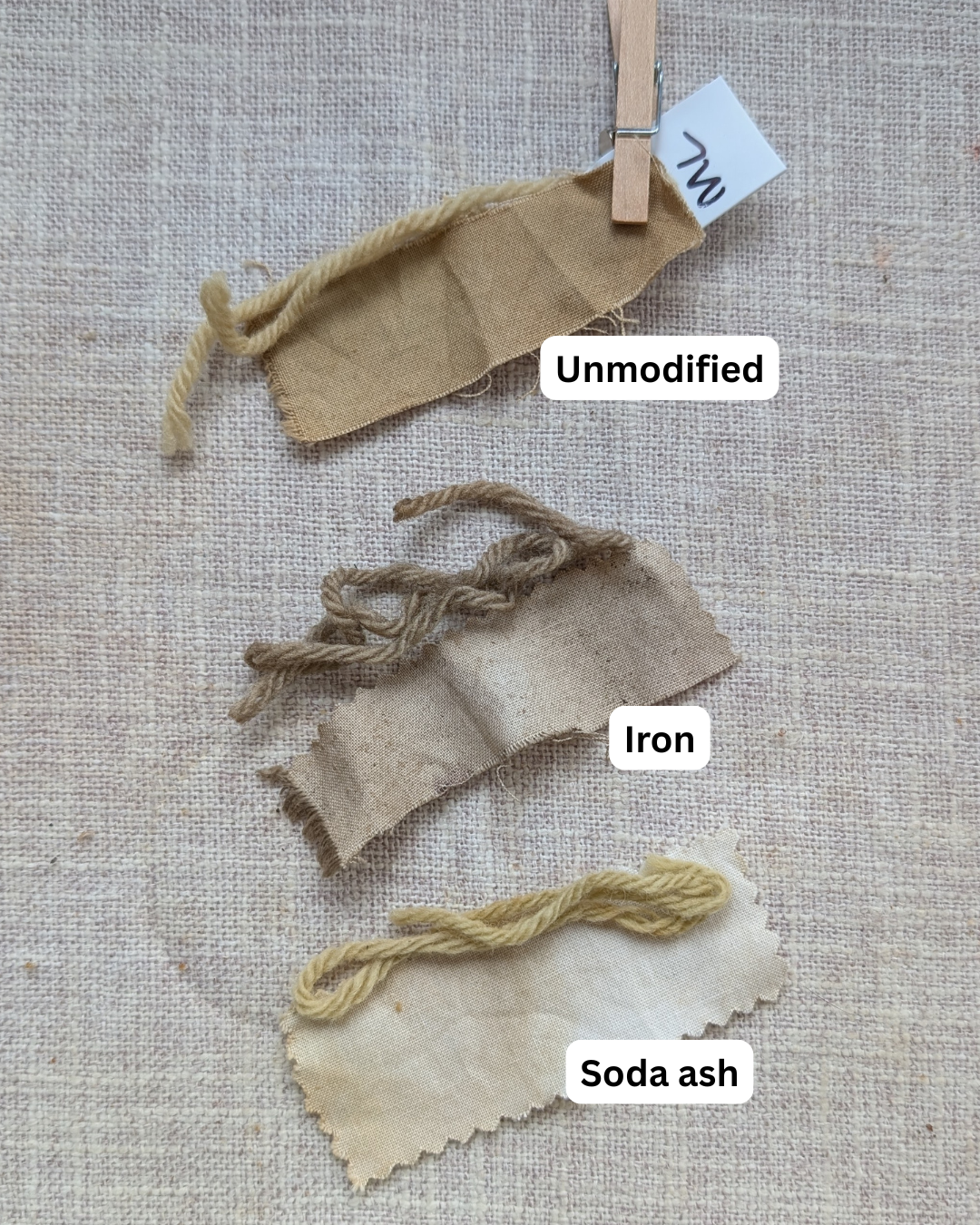
The mulberry leaves had a nice effect that was in line with the trends that I expected. The soda ash fabric was quite a bit lighter than the unmodified result. This could have been because of inconsistencies in how long they were in the bath- I did not measure time precisely.