2024 foraging highlights & allium pesto
reflections, ideas, and a recipe.
Originally posted on an old blog.
2024 was the year that I really focused on plants for the first time. I had been learning ambiently over previous cycles, and I grew up eating onion grass out of the yard as many lucky kids do. This was the first time that I put aside a lot of birding and hiking over the summer. Plants, plants, plants.
With foraged materials, I made jams, pesto, pickles, seltzers, dolma, microgreens, sauteed appetizers, syrups… I also wove baskets. The possibilities are endless with plants. Here are my highlights from 2024, in no particular order.
Staghorn Sumac
I can’t shut up about sumac, and I’m not going to try. She’s a citrusy summer sidekick. Tart and sharp and bright and stock full of color. I’m obsessed with her. Obsessed!
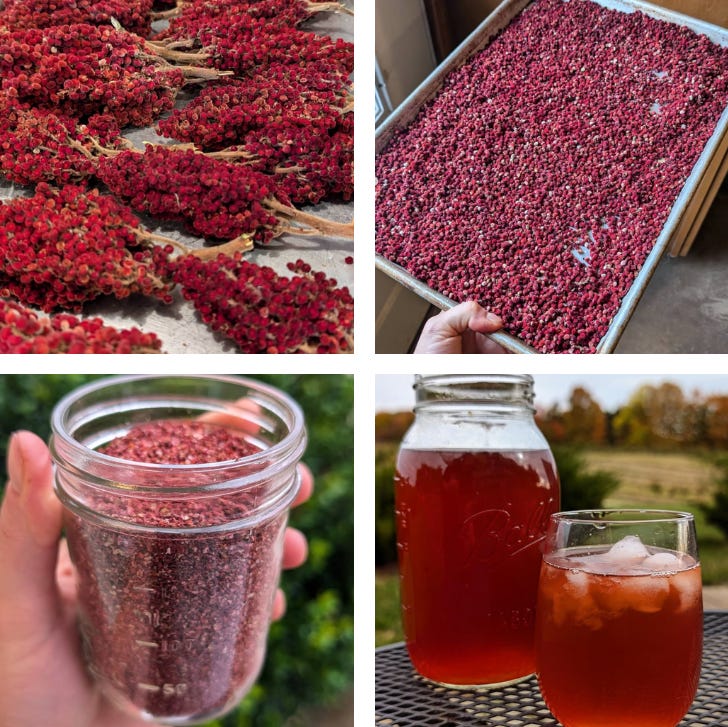
Collect the red berries at the end of summer when there is no green left in the berry clusters. Harvest them during a dry period because rain washes away all of the flavor. I dehydrated bunches overnight, then (clumsily) separated the berries, picked out the stems, separated the yummy red fuzz from the seeds with a food processor, and sieved out the seeds. I used a fine sieve to remove the seed casings and got a few beautiful little jars of this treasure. Sumac is in the cashew family, so please be cautious if you have a dietary restriction or allergy around cashews.
Microgreens
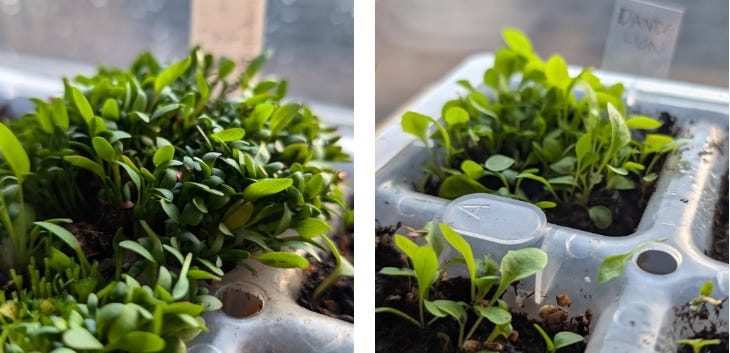
I experimented with growing microgreens with seeds from common weeds in the alleys. Everyone says dandelion greens are so delicious (second pic) but I actually greatly prefer Curly Dock (first pic).
Once the chafe is removed, you can see how densely they grow. The flavor is crunchy, vegetal, and sweet with zero bitterness. The seeds are easy to find and absolutely prolific- it’s easy to fill a gallon size bag with these seeds from a single cluster of individual plants. I find curly or broad-leaved dock in every alley without fail.
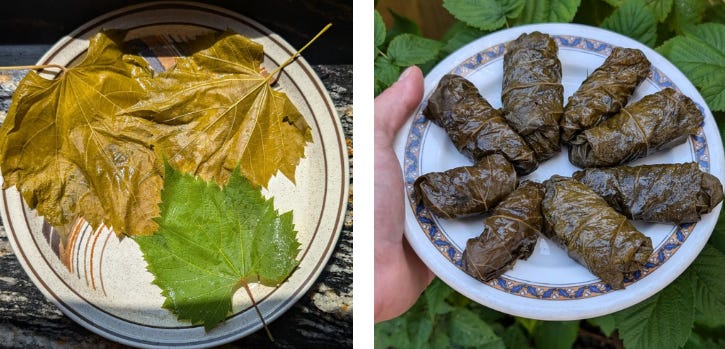
Dolma made with riverbank grape leaves
These were great, but bitterness was an issue- especially the veins and older, larger leaves. Some folks recommend using Summer Grape leaves instead. Riverbank is easier to find so I wanted to give it a shot.
Definitely a cool experiment, and the bitterness may have been my fault. I used a recipe that included lemon rind, which I would skip entirely next time. If it continued to be a problem, I would add some honey or stick to the younger leaves, even though they’re smaller and harder to roll.
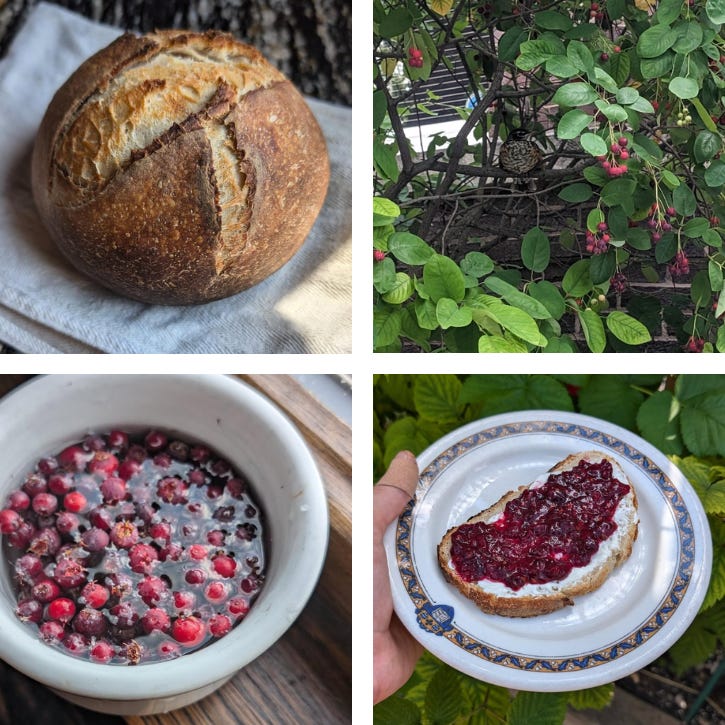
Serviceberry jam with homemade sourdough
Juneberry, Saskatoon berries. This is a shrub that is made of love. I was surprised to find multiple locations in my neighborhood with serviceberry bushes! Whipped up an incredible jam, and I cannot wait to have this again.
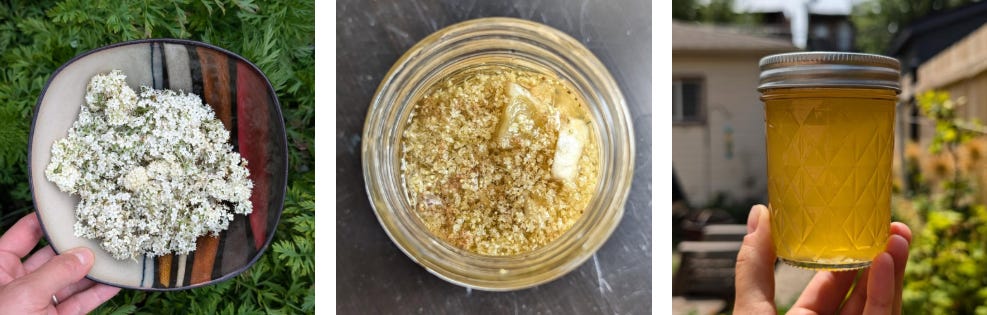
Elderflower syrup
Wow. Wow. Wow. The first time I made elderflower syrup, I used foraged flowers that were too old so it tasted like crap. I gave it a second chance and boom.
Definitely the best foraged syrup I’ve made so far. Lilac-forward stuff is skunky to me by comparison. The only flower that tastes better is wisteria.
American Elderberry flowers + 1 part sugar + 1 part boiling water + lemon slices. Let it sit on the counter for a day or two, then strain. It’s that easy. Don’t rinse the flowers beforehand or else you’ll remove all the yumminess. It’s bright, thick, floral, and delicious.
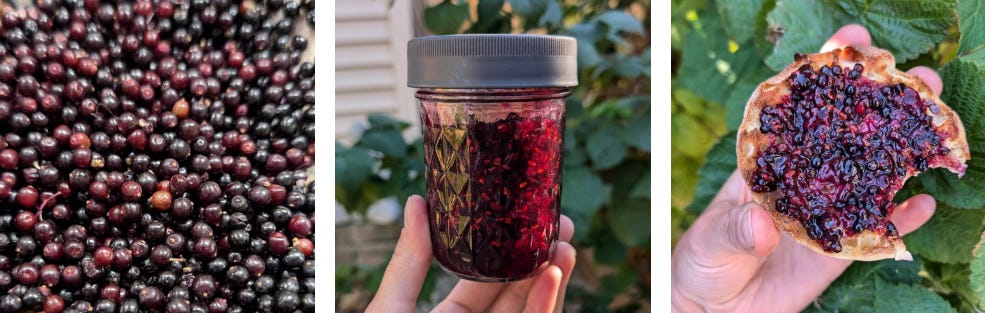
Elderberry Jam
Elder gives and gives and gives. 10/10. Good for the flu and great for the taste buds.
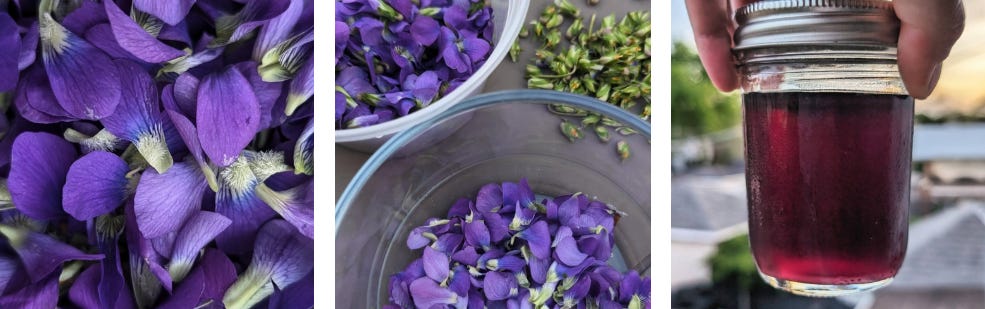
Violet Syrup
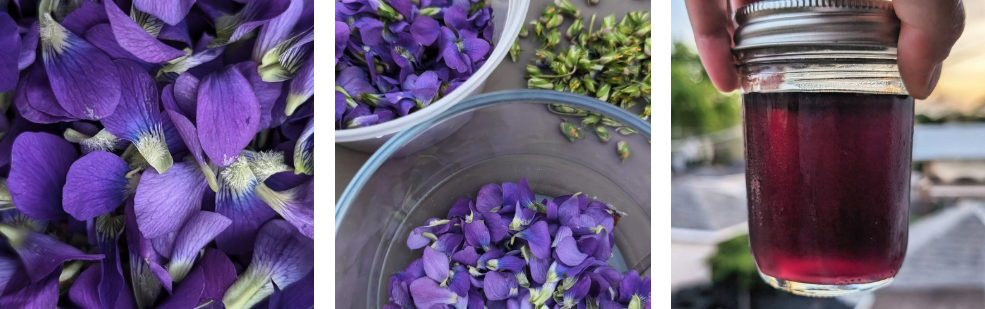
The color is unbeatable, but violets don’t impart much flavor. I relied on some mint from the backyard for taste. Remove the petals by pinching away the calyx before steeping to avoid any vegetal bitterness.
Alliums
We have a mix of native and non-native allium species. Odorless until disturbed, they all share the iconic skunky musk that makes Alliums easy to identify without much thought. Crushing or otherwise damaging the leaves causes the enzyme alliinase to convert alliin into allicin, flagged by the fresh pungent smell. Chicago is named after the skunky scent of ramps, the city’s name being a French rendering of the indigenous Miami–Illinois name for “striped skunk.”
The Allium species commonly found in the Chicago region are edible, but not all of them make for great eating. The large, ornamental Alliums that can reach four or five feet in height usually aren’t known to be great cooking ingredients, but I haven’t personally tried them.
Alliums have many different shapes and sizes, and while they do have some lookalikes, those plants lack the onion/garlic scent released when Allium leaves are damaged. If a plant’s crushed leaves smell strongly like onions, it’s an Allium. Dangerous plants with similar looking leaves include death camas, Lily-of-the-Valley and Star of Bethlehem, but none of them produce the same smell. Please err on the side of caution if you are uncertain and do not over-rely on plant identification apps, which I find frequently misidentify alliums.
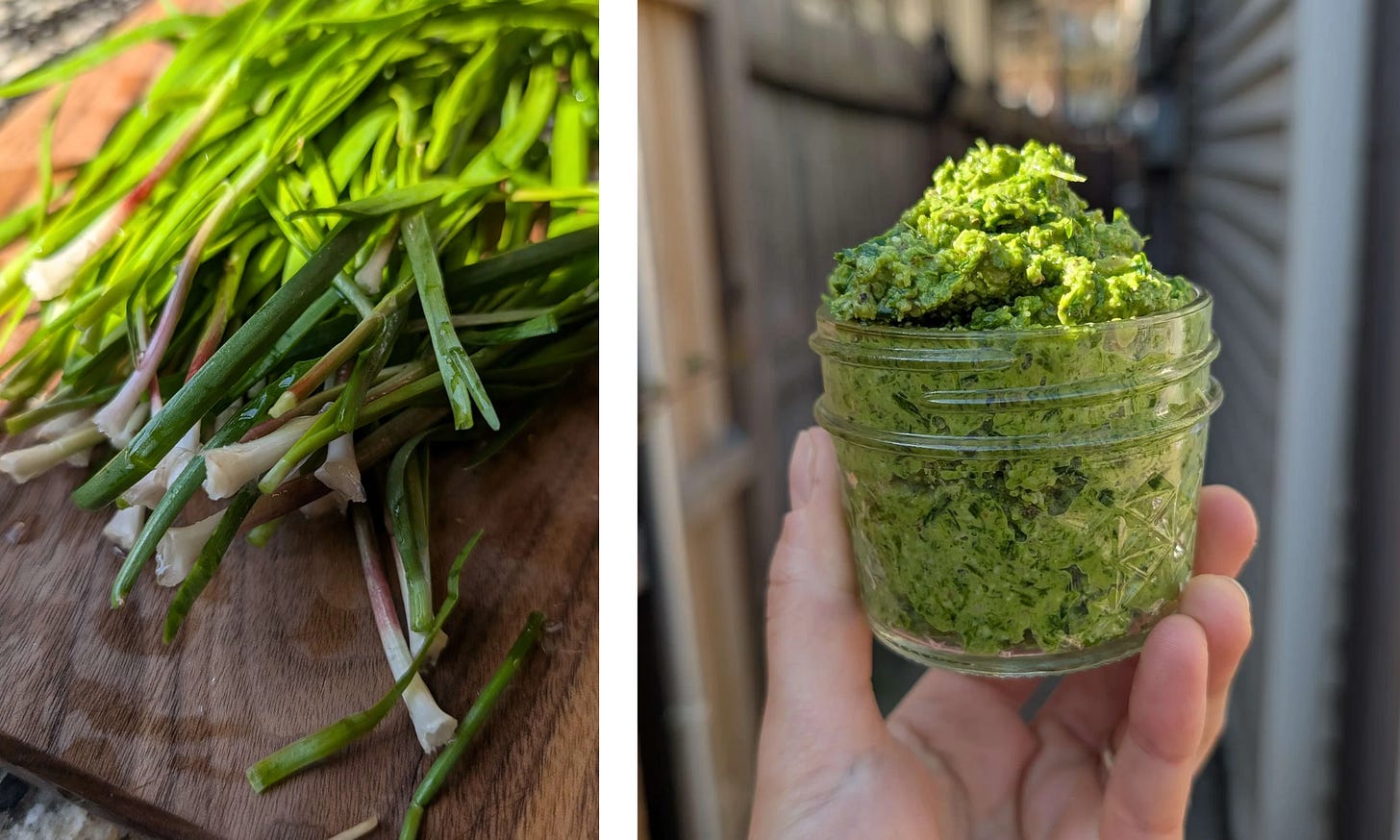
Any-Allium tiny batch Pesto
My mom is a life-long gardener. We grew up making pesto every year, and this is my favorite use for Alliums. Pesto can be made with any tasty leaf that you find, and it’s easy as hell.
Basic recipe: leaves, oil, salt. It can be chunky or smooth, creamy or not. Pesto is not a science as long as it tastes good in the end. Adjust proportions to your taste.
- 2ish cups of Allium leaves
- 1-3 tablespoons of olive oil (to taste)
- Start with 1/4 teaspoon each of salt and pepper
Optional:
- 1 raw garlic clove (for extra kick)
- 1/4 cup of walnuts or pecans
- Parsley or other leaves to create a blend
- 1 tablespoon of fresh lemon juice
- 2 tablespoons of half-and-half or heavy cream
Cut roots off the bulbs and discard the roots. Thoroughly rinse the foraged materials, then chop them roughly to avoid stringiness. Throw materials in a food processer and blend to desired consistency (but I suggest adding nuts or anything added for texture at the end.)
Eat with scrambled eggs, in lasagna, on pizza or sandwiches, in grilled cheese, as a marinade, on crackers, in dips, on steak, or however else you can imagine.
links
The Forager’s Harvest (Sam Thayer)