foraged dyes: process tl,dr
the basics of how to open up a world of color at your fingertips.

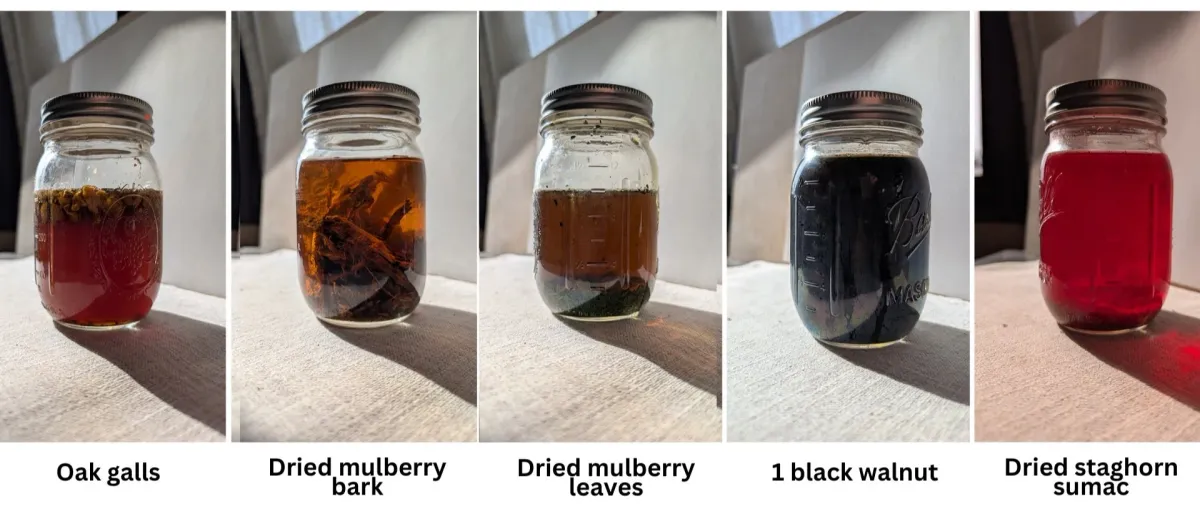
Here’s the short version of what I’m doing, clumsily referencing Botanical Colors’ amazing blog posts, a few other articles, Reddit, and personal experience:
It’s usually mandatory to mordant any plant (cellulose) fibers for color to really stick. Mordanting animal fibers is optional, but usually unnecessary. It's recommended to wash new, storebought fabric before mordanting and dyeing.
Mordant the cellulose fabric in two baths
- First bath:
- Heat a stock pot half-filled with tap water so it is warm but comfortable to the touch. Dissolve 5-10% WOF (weight of fabric) of aluminum acetate in the water.
- Add the fabric for about an hour. Longer is fine. Make sure the fabric is unfolded and doesn't have bubbles trapped so that it is evenly distributed in the water. Mix occasionally. Remove the fabric and do not rinse it.
- The bath can be used up to 3 times. The exhausted water can be disposed of in sink when done.
- There are two options for the second bath, done with a fresh pot of water:
- 5% WOF of calcium carbonate (found at homebrew supplies stores)
- Dissolve in enough warm water to cover the fabric, add fabric and soak with heat on for 30 minutes.
- OR 5% WOF of wheat bran
- Tie up the wheat bran in cheesecloth, steep in a small pot of water heated to a very low simmer for 30 minutes.
- Add the bran water and bran in cheesecloth to enough warm water to cover the fabric with two inches of extra depth. Steep for 30 minutes and gently rinse away bran matter before dyeing.
- 5% WOF of calcium carbonate (found at homebrew supplies stores)
- This pre-mordanted fabric can be air dried, then stored in a cool place out of the sun.
Prep the dye
- Fill container with 5-10% WOF dye material and water. The material of the container matters:
- Glass jars work great for small projects and color experiments
- Steel and enamel pots are nonreactive, and they will not effect the water
- Aluminum, copper, tin, and iron containers will all effect the water in different ways
- Heat enough water to cover the fabric on the stove to a simmer, then steep the material without the fabric as long as you can be patient (an hour might be enough, overnight is great, but some can steep for weeks!)
- You can leave the heat at a simmer for a while to speed up steeping, or kill the heat after a few minutes. It's all an experiment!
- Strain out the dye material for an even dye, or keep it in for a stronger dye (which may leave uneven, splotchy pigment distribution on the fabric)
Dye!
- Add the fibers to the dye bath and bring to just below a consistent simmer. Do not reach a full boil.
- Gently stir the fabric around so that the fabric doesn’t fall to the bottom and burn.
- Steep for 1 minute to several weeks, depending on material and dye type
- For darkest colors you can steep for as long as you can be patient. The materials can begin to decompose, which may or may not be desirable.
In order to try out different dyes simultaneously on small samples of fabric, I like to use a double-boiler method. This way I can steep small jars of multiple dyes in the same stockpot, producing five samples at a time. This also entirely prevents the fabric from scalding by touching the hot metal pot. I strongly encourage you to just play with the materials and do small experiments before committing to using a large, expensive, or unique garment/fabric. Every result is different with natural dyes, which make them fun!